How to Choose the Right Pet Supplements
Before adding a powder, chew or oil to your pet’s routine, learn how to read the label, evaluate the seller’s information and ask your veterinarian better questions.
1. Start With the Need, Not the Trend
A product should not be chosen simply because an ingredient is popular. Start by asking what you are trying to address and whether a supplement is appropriate at all. Your veterinarian can consider species, age, diet, medications, health history and current symptoms.
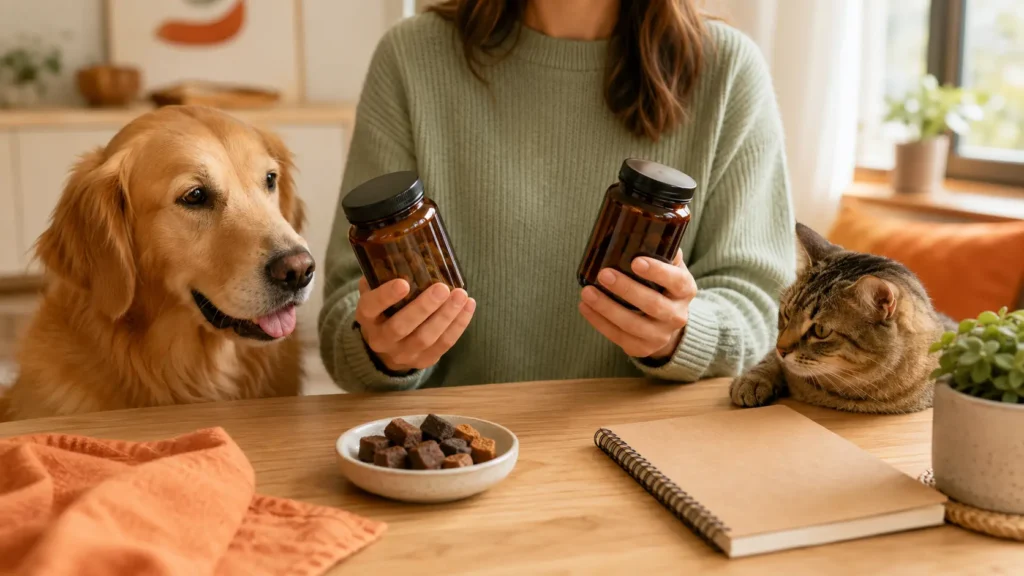
Bring a clear photo of the full label to the appointment. Include the ingredient list, directions, warnings and manufacturer information. If your pet already takes medications or other wellness products, share the complete list.
2. Read the Complete Pet Supplement Label
The front of a package is designed to attract attention; the full label contains the information needed for an informed decision. Look for:
- The animal species and life stage for which the product is intended
- A clear product identity and net quantity
- A complete ingredient list using recognizable ingredient names
- Serving or use directions based on the final manufacturer label
- Warnings, storage instructions and contact information
- A lot or batch number and best-by or expiration information, when applicable
A professional-looking package is not proof of quality. If important information is missing, difficult to read or inconsistent between the container and the website, pause before purchasing.
3. Ask Practical Quality Questions
A responsible manufacturer or seller should be able to identify who makes or distributes the product and how customers can ask product-specific questions. Useful questions include:
- Who manufactured or distributed this product?
- Is the lot number traceable if there is a quality concern?
- Are storage and serving directions clearly stated?
- Does the website description match the physical label?
- Can the company explain what quality testing is performed without relying on vague claims?
Do not invent missing information. A seller should use the real brand, real ingredients and real identifier data supplied by the manufacturer.
4. Be Careful With Disease and Miracle Claims
Be skeptical of products promoted as a cure, guaranteed treatment or replacement for veterinary care. Claims that a non-approved product diagnoses, treats, cures or prevents a disease can raise serious regulatory and safety concerns.
Also watch for exaggerated promises such as “works instantly,” “completely risk-free,” “vet approved” without verifiable context, or dramatic before-and-after stories presented as guaranteed results. Responsible information explains intended use without promising a medical outcome.
5. Add Only With a Clear Plan
If your veterinarian agrees that a product is appropriate, follow the final label. Do not exceed directions, combine multiple products with overlapping ingredients or use a dog product for a cat unless specifically instructed by a veterinarian.
Introduce only one new product at a time when your veterinary professional advises it. Record the product name, lot number, start date and any changes you observe. Stop and contact your veterinarian if your pet develops a concerning reaction.
Questions to Take to Your Veterinarian
- Does my pet have a demonstrated need for this product?
- Could any ingredient interact with a medication or existing condition?
- Is the serving direction appropriate for my pet?
- What changes should I monitor, and when should I stop?
- Is there a better-supported food, routine or veterinary option?
Choose Information Before Promotion
The right decision may be a carefully selected product—or no supplement at all. Clear labels, traceable manufacturer information, realistic claims and veterinary guidance matter more than packaging, trends or a long list of ingredients.
Need Help With a BranBear Product?
Contact our support team for label, package or order information. For medical guidance, always speak with your veterinarian.
Contact BranBear